In this guide
Searches for a blood pressure diet plan in India usually want a food list that drops the reading by itself. Food can help. It does not cancel tablets, sleep, or a very salty day of pickles and namkeen.
The salt number that matters
The World Health Organization advises adults to keep salt under about 5 grams a day, close to one level teaspoon from all sources, not only the pinch on the table. Surveys of Indian diets often find intakes well above that, especially once packaged snacks, papad, pickles and eating out are counted.
Sendha namak and iodised salt are both sodium salts. Switching the brand without using less does not solve the sodium problem. Iodised salt still matters for iodine. That comparison is in the sendha namak vs normal salt guide.
What the DASH trial showed
DASH means Dietary Approaches to Stop Hypertension. It is a pattern built from vegetables, fruit, whole grains, pulses, and low-fat dairy, with less saturated fat and less salt. It is not a named Indian thali, but the food groups map onto dal, sabzi, fruit, curd and whole-grain roti.
In the original DASH trial, published in 1997, the DASH diet lowered blood pressure by about 5.5 mm Hg systolic and 3.0 mm Hg diastolic compared with a control diet over eight weeks. People who already had high blood pressure tended to see a larger drop. That is support for the pattern. It is not a promise of the same change for every person, and it does not replace treatment.
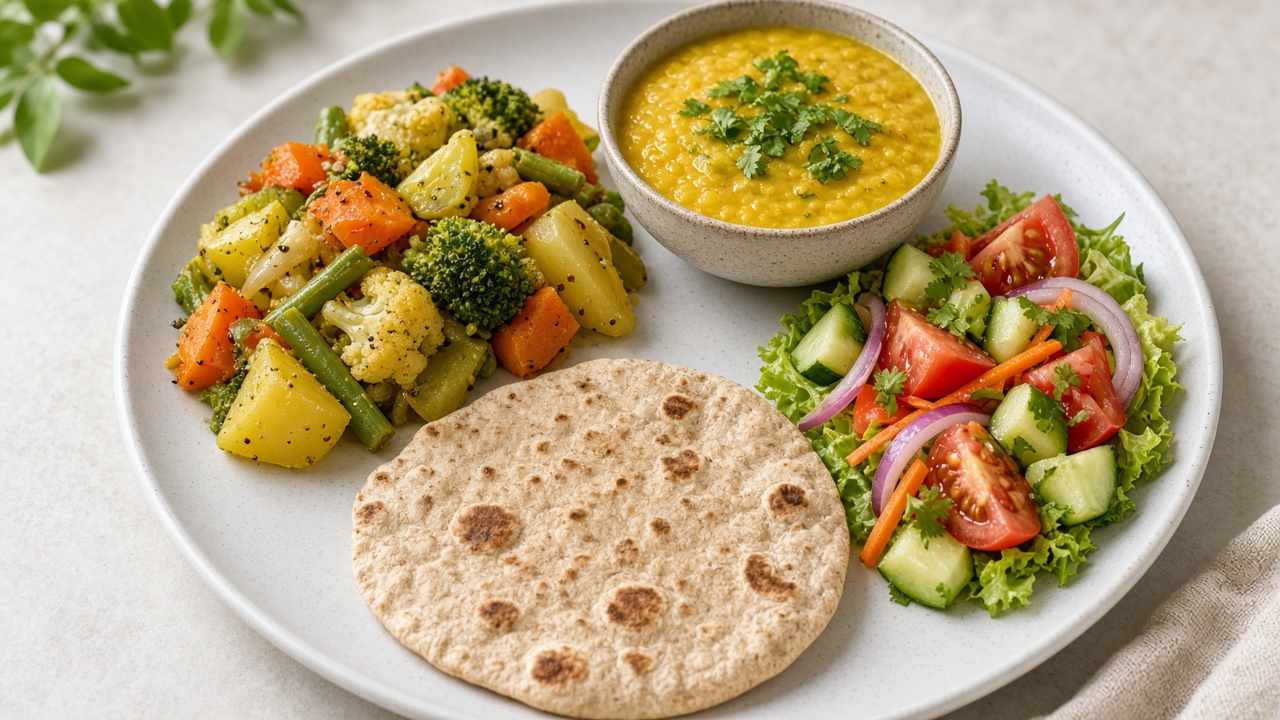
An Indian plate that fits the idea
- Fill more of the plate with cooked vegetables and salad you tolerate
- Keep a dal, curd, or other protein at lunch and dinner
- Use whole wheat or millet roti in a portion that matches your hunger and sugar goals
- Include fruit most days, unless your clinician has limited potassium or sugar
- Cook with measured oil instead of daily deep frying
This is an illustration. A person with kidney disease may need less potassium even when fruit and dal look heart-friendly on a general list.
Where extra sodium hides
- Pickles, papad, packaged chutneys and instant noodles
- Namkeen, biscuits and restaurant gravies
- Adding salt before tasting
- Treating rock salt as unlimited because it is traditional
Practical target: iodised salt in cooking, fewer salty sides, and more vegetables. Recheck home readings and keep your doctor in the loop.
Common questions
How much salt is advised for blood pressure?
The World Health Organization advises adults to stay under about 5 grams of salt a day. Many Indian diets run higher because of pickles, papad, namkeen and restaurant food.
Can diet replace blood pressure tablets?
No. Eating patterns such as DASH can lower readings in studies, but prescribed medicine stays in place unless your doctor changes it.
Is sendha namak better for high blood pressure?
Rock salt is still a sodium salt. It is not a proven way to lower blood pressure. Read the sendha namak comparison for the iodine difference.
Important: A food pattern can support blood pressure care. It does not replace prescribed medicine, and potassium limits change if the kidneys are involved.
Need a personalised diet plan?
If you need a blood pressure, heart or kidney-aware diet plan, the salt target and the plate are personal. Different people need different diet plans.
Contact Diet in Disease. You can book a 15-min call for ₹200. The ₹200 is adjusted when you take a diet plan.