
In this guide
People searching sendha namak vs normal salt usually want a winner. There is not one. Sendha namak (rock salt) and normal iodised table salt are both mostly sodium chloride. They help food taste complete, and both count toward your daily salt limit. The real difference is iodine, processing, and when each one fits Indian cooking.
What each salt is
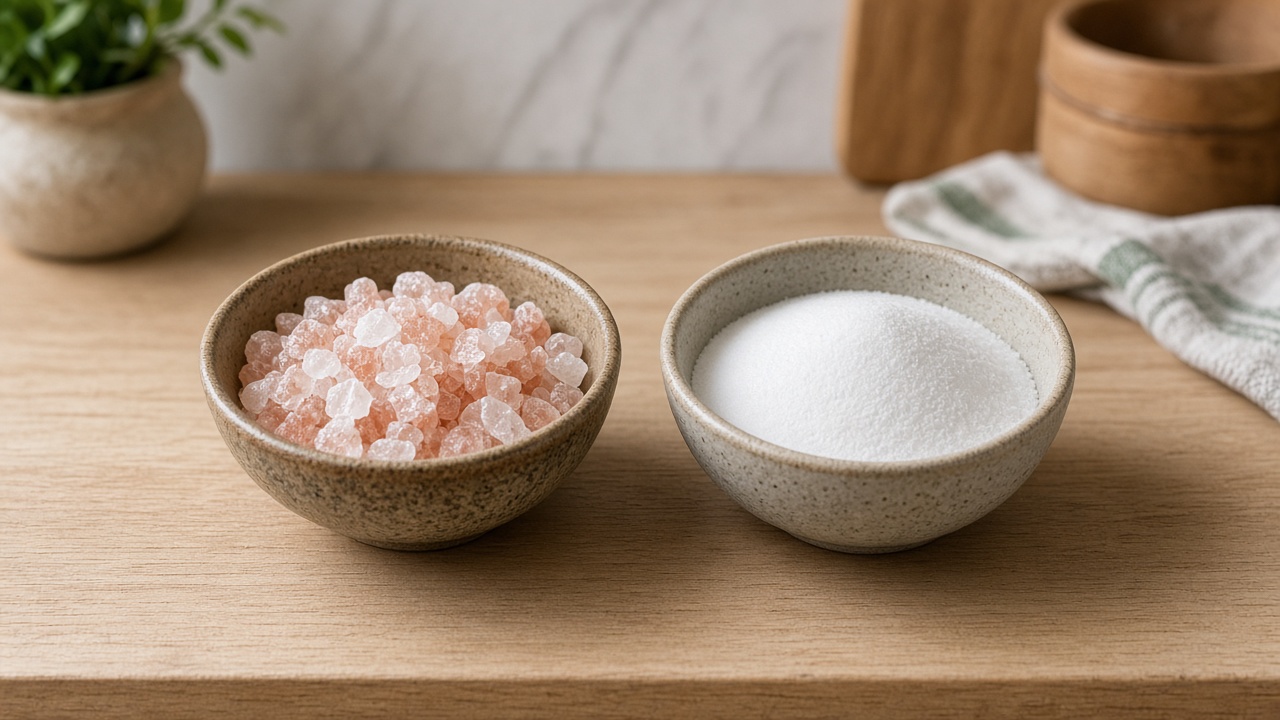
Sendha namak is rock salt mined from salt deposits. Crystals are often coarser and may look white or faintly pink. It is commonly used in vrat (fasting) meals and is valued in Ayurvedic kitchen practice.
Normal salt in most Indian homes means refined iodised table salt. Food rules in India set iodine in edible salt so households get a reliable source. The usual standard is about 30 ppm iodine at production and at least 15 ppm at the point you use it, under the national iodine programme and FSSAI limits.
The World Health Organization advises adults to keep salt under about 5 grams a day (roughly one level teaspoon). Many Indian diets sit higher than that because of pickles, papad, namkeen, restaurant food and the salt already in dal and sabzi.
Side-by-side comparison
- Main compound: both are sodium chloride
- Sodium: similar per spoon. Sendha namak is not a low-sodium salt
- Iodine: iodised table salt is fortified. Most rock salt is not, and tested samples often show little or no iodine
- Other minerals: rock salt can contain trace iron, potassium, zinc or calcium. The amounts are too small to meet daily needs unless you eat far too much salt
- Texture and taste: rock salt is coarser and slightly different in flavour. Table salt dissolves evenly in everyday cooking
- Best everyday role: iodised salt for regular meals. Sendha namak for fasting plates or an occasional dish, not as the only salt in the house
Benefits of sendha namak
- Fasting meals: it is the salt many families already use for vrat food such as sabudana, kuttu or singhare preparations
- Less refined taste: some people prefer the flavour of coarse crystals over fine table salt
- Trace minerals: small amounts of minerals such as iron, potassium, zinc and calcium can be present. They add colour and a little variety, not a mineral supplement
- Traditional use: Ayurveda has long used rock salt in food and home remedies. That history explains the trust. It does not, by itself, prove modern claims such as lowering blood pressure
Use it in the same careful quantity you would use any salt. A bigger pinch because it "feels natural" still raises sodium.
Benefits of normal iodised salt
- Iodine for the thyroid: iodine is required to make thyroid hormones. Too little iodine is linked with goitre and, in pregnancy and childhood, poorer brain development
- A public-health safety net: India's iodised-salt programme exists because food alone does not reliably cover iodine for everyone
- Practical for daily cooking: it is inexpensive, measured easily, and seasons dal, sabzi, roti dough and rice without a special recipe
- Predictable iodine: a labelled iodised pack is a clearer source than assuming rock salt or gourmet salt contains iodine
Iodised salt is still salt. It does not cancel high blood pressure, kidney disease or a very salty diet. The benefit is iodine, not permission to use more.
If thyroid health is your main question, read the thyroid diet plan as well. Salt choice is only one piece.
How to use both at home
- Keep iodised salt as the salt for regular family cooking.
- Use sendha namak when a fasting menu or a specific recipe calls for it.
- Do not add both in large amounts to the same day and assume one is "free."
- Taste food before adding extra salt. Pickles, papad, sauces and packaged snacks already contribute sodium.
- Store iodised salt in a closed container, away from strong heat and moisture, so iodine is better retained.
Simple rule: iodised salt for everyday plates, sendha namak when the dish or fast needs it, and less salt overall if blood pressure, heart or kidneys are a concern.
Claims that do not hold up
- "Sendha namak lowers blood pressure." This is not an established benefit. Extra salt of any kind can raise blood pressure in many people.
- "Rock salt has no sodium." It does. That is why it tastes salty.
- "Trace minerals make it a health food." You would need an unsafe amount of salt to treat those traces as your iron or calcium source.
- "Table salt is only chemicals." Iodised salt is sodium chloride plus a measured iodine compound. That iodine is the point of the fortification.
People with high blood pressure, kidney disease, heart disease, or a thyroid condition on medicine should not switch salts based on a reel. The dose, other sodium sources, and lab reports matter more than the brand name.
Common questions
Is sendha namak healthier than normal salt?
Not as a full replacement. Both are sodium salts. Iodised salt protects iodine intake. Rock salt fits fasting and occasional use.
Does sendha namak have less sodium?
No. A similar amount of rock salt still supplies sodium. It is not a low-sodium product.
Can I use only sendha namak if I have thyroid issues?
Do not drop iodised salt unless your doctor has a clear plan for iodine. Thyroid needs are individual, especially in pregnancy or if you take thyroid medicine.
Which salt is better for weight loss?
Neither melts fat. Keeping total salt moderate can help with water retention and blood pressure, but weight loss still depends on the full diet.
Important: One salt tip is not a diet plan. Two people can need different sodium and iodine advice if one has high blood pressure, another has thyroid medicine, and another is pregnant or has kidney disease.
Need a personalised diet plan?
If you need a thyroid, blood pressure, heart or kidney-aware diet plan, salt choice should sit inside your full chart, not replace it. Different people need different diet plans.
Contact Diet in Disease if you want that worked out for your reports, medicines and kitchen. Dt. Shifali Garg can also start with a discounted call for 15 mins.