In this guide
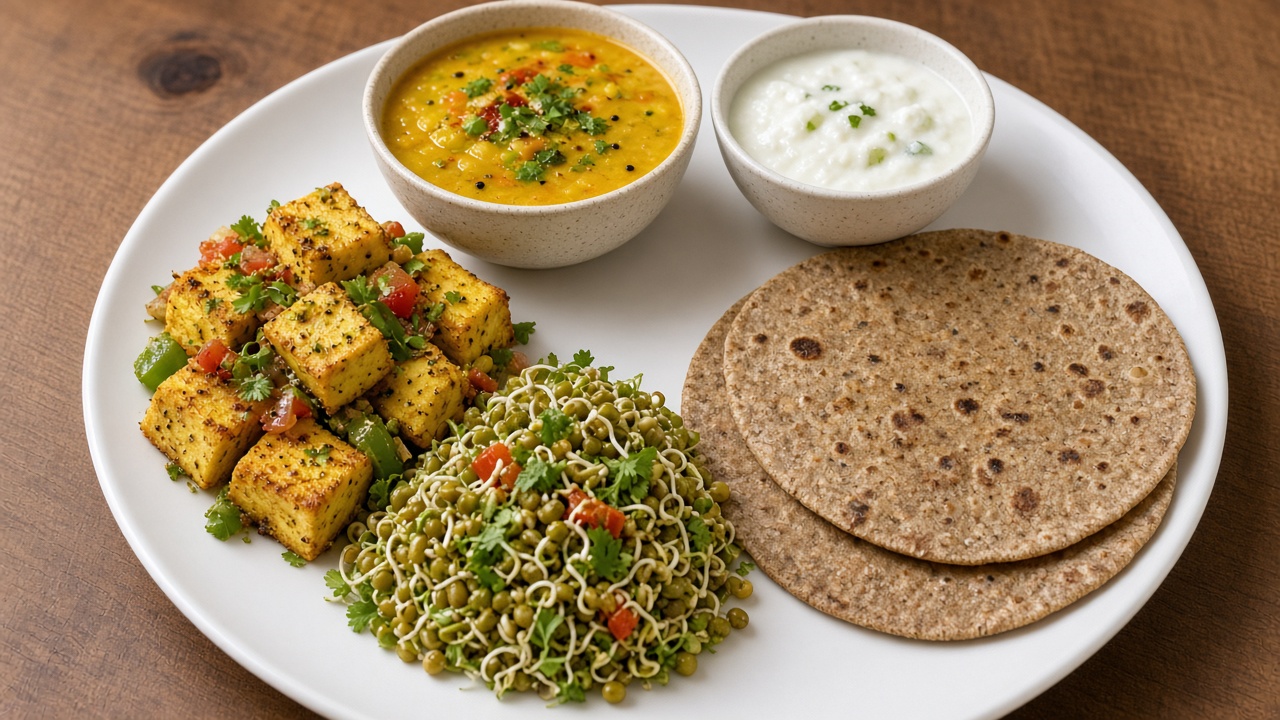
Protein is one of India's most searched nutrition topics. People want a high protein vegetarian Indian diet plan that still uses dal, roti, sabzi and curd. The good news: you do not need imported meal kits. You do need clearer portions and better distribution across the day.
How much protein you need
According to ICMR-NIN nutrient requirements (2020), the recommended dietary allowance for healthy Indian adults is about 0.83 g protein per kg body weight per day. The estimated average requirement is about 0.66 g/kg/day.
A useful footnote from the same guidance: if the diet is heavily cereal-based with lower quality protein, requirements may be closer to 1 g/kg/day. ICMR-NIN also highlights a better cereal-legume-milk balance (about 3:1:2.5) for protein quality.
Example: a 60 kg adult at 0.83 g/kg needs roughly 50 g protein per day. At 1 g/kg, the target is about 60 g. Athletes, pregnancy, illness recovery and some medical conditions need individual advice.
Best vegetarian protein foods in Indian kitchens
- Dals and pulses: moong, masoor, chana, rajma, lobia, soy chunks or tofu
- Dairy: curd, buttermilk, milk, paneer (portion-aware if calories matter)
- Sprouts and roasted chana for snacks
- Millets with dal for better meal quality than refined flour alone
- Eggs, if you follow an eggetarian pattern
- Sattu (roasted gram flour) drinks as a traditional protein option
Practical rule: include a clear protein source at breakfast, lunch and dinner, not only at one meal.
Sample high protein vegetarian day (illustrative)
This is an example pattern, not a prescription for every body weight or condition.
- Breakfast: vegetable omelette or paneer bhurji with 1 millet roti, or moong chilla with curd
- Mid-morning: buttermilk or roasted chana
- Lunch: 1 to 2 rotis or millet, 1 katori thick dal, sabzi, salad, curd
- Evening: sattu drink (low sugar) or sprouts chaat with lemon
- Dinner: lighter plate with dal or paneer, lots of vegetables, controlled grain
People with diabetes, kidney disease or high uric acid need different protein and portion rules. That is why personalisation matters.
Common mistakes
- Eating only carbs at breakfast (chai and biscuits)
- Thinking one scoop of whey fixes a low-protein day
- Using huge paneer portions fried in oil and calling it healthy
- Ignoring fibre and vegetables while chasing protein
Common questions
How much protein do I need daily?
Many healthy adults aim near 0.83 g per kg body weight. Cereal-heavy diets may need closer to 1 g per kg. Medical conditions change this.
What vegetarian foods give protein?
Dal, pulses, soy, paneer, curd, milk, sprouts, millets with legumes, and eggs if included.
Do I need whey protein?
Not always. Food first. Supplements are optional when total intake stays low despite good meals.
Important: One food tip helps, but it is not a full diet plan. Two people with the same goal can need different plates if one has diabetes, PCOS, thyroid, fatty liver, kidney concerns or a busy work schedule.
Need a personalised diet plan?
If you need a high protein vegetarian diet plan for weight loss, PCOS, diabetes, sports training or general wellness, remember that protein targets and meal timing differ person to person.
If that sounds like you, contact Diet in Disease. Dt. Shifali Garg builds charts around your reports (if available), kitchen and routine, then supports you on WhatsApp.